The Weight of It: How Obesity Became America's Silent Epidemic
Obesity in America
STANDARD
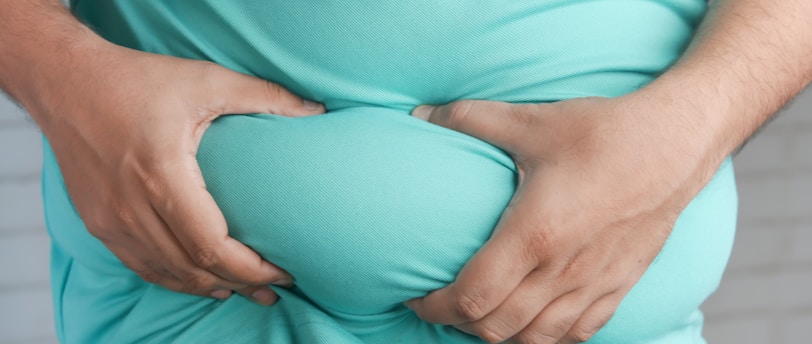

My post contentFifty years ago, it was the exception. Today it's the rule.
In the early 1970s, roughly 15 percent of American adults were classified as obese. That number seemed alarming at the time. Looking back now, it looks almost quaint. As of 2021 to 2023, the prevalence of obesity among adults was 40.3 percent — 39.2 percent in men and 41.3 percent in women. That's not a slow drift. That's a transformation of an entire population's health in the span of two generations. CDC
Obesity rates among children and adolescents have more than tripled since the mid-1970s, with just over 21 percent of U.S. children and adolescents ages 2 to 19 now having obesity. Children. Twenty-one percent. That number would have been unthinkable in 1975. TFAH
What happened? The short answer: everything changed at once. Food became cheaper, more processed, and more available around the clock. Jobs moved indoors and off their feet. Screens replaced movement. Portion sizes grew. And the cumulative effect of all those small daily shifts compounded across decades into a public health crisis that costs the United States hundreds of billions of dollars every year and — more to the point — costs individual people years of their lives.
What Obesity Actually Does to the Body
Excess weight isn't just a cosmetic issue or a number on a scale. It's a physiological load that affects nearly every system in the body simultaneously — and the cardiovascular system takes some of the hardest hits.
Here's the mechanism. Carrying excess fat tissue increases the total demand on the heart. The heart has to work harder to push blood through a larger body. Over time, that sustained demand causes the heart muscle to thicken and stiffen — a condition called left ventricular hypertrophy. The chambers of the heart become less efficient. Blood pressure climbs. And the arteries, under persistent strain and exposed to higher levels of inflammatory compounds released by fat tissue, begin to accumulate plaque. That plaque narrows the vessels, stiffens them, reduces blood flow. When you have high blood pressure, the heart works harder to deliver blood around the body, causing damage to your arteries by making them less flexible. This lowers blood flow and oxygen to the heart, which can lead to heart disease, and also increases the risk for heart attack, heart failure, and stroke. American Heart Association
Obesity adversely affects cardiac function, increases the risk factors for coronary heart disease, and is an independent risk factor for cardiovascular disease. Not a contributing factor. An independent one. Meaning even if everything else were controlled for, excess weight alone elevates cardiovascular risk. AHA Journals
The Stroke Connection
Stroke happens when blood flow to part of the brain is interrupted — either by a blocked artery or a burst one. Obesity raises the risk of both.
The excess weight drives up blood pressure, which strains artery walls. It raises LDL cholesterol and triglycerides while lowering the protective HDL cholesterol — the combination that builds the fatty deposits inside arterial walls. If the cholesterol buildup gets too thick, it can trap blood clots in your arteries and lead to a heart attack or stroke. Add in the elevated blood sugar that often accompanies obesity, and you have a vascular environment that's primed for disaster. American Heart Association
More than 71 percent of U.S. adults have overweight or obesity. That's not a statistic about other people. That's most of us. PubMed Central
Sudden Death — The Risk Nobody Wants to Talk About
There's a category of cardiovascular death that arrives without warning. One moment a person is alive; the next they're not. Sudden cardiac death — cardiac arrest triggered by an arrhythmia or acute event — is disproportionately common in people with obesity.
A case-control study from the Cardiac Risk in the Young Center for Cardiovascular Pathology was referred 6,457 cases of sudden cardiac death, of which 4,492 had a recorded BMI. Of those, 1,202 were obese. The study found that obesity cardiomyopathy — a distinct form of heart muscle disease driven by excess weight — was present in a significant portion of those deaths. The heart, strained for years by carrying too much weight, simply gave out. nih
From 1999 to 2024, a total of 161,870 deaths were jointly attributed to both obesity and heart failure. That's not a trend line on a chart. Those are people. nih
The Diabetes Connection
Obesity and type 2 diabetes are so closely linked that researchers sometimes treat them as a single condition. Severe obesity increases the risk of diabetes more than sevenfold. The mechanism is insulin resistance — excess fat tissue, particularly around the abdomen, interferes with the body's ability to use insulin effectively. The pancreas compensates by producing more. Eventually it can't keep up, blood sugar rises, and the diagnosis arrives. PubMed Central
Excess weight can make the body more resistant to insulin, causing the pancreas to make more insulin. Over time, the pancreas can't keep up and blood sugar levels increase, putting you at a higher risk for type 2 diabetes. People with diabetes have double the risk for heart disease or a stroke. American Heart Association
Double. That's the multiplier that sits between obesity, diabetes, and cardiovascular disease. They aren't separate problems. They're a cascade.
Losing Weight Under Medical Supervision Can Save Your Life
Here's what the data actually shows about what happens when people lose weight — not crash diet, not yo-yo, but lose weight meaningfully and sustain it under professional guidance.
Weight reduction over 6 to 24 weeks ranging from 10 to 25 percent weight change significantly improved arterial flow-mediated dilation. The arteries became more flexible. Blood moved better. The dysfunctional metabolic, inflammatory, thrombotic, and vasodilator properties of the endothelium may be reversed with long-term therapeutic intervention. PubMed CentralPubMed Central
That word — reversed — matters. The damage isn't always permanent. The vascular system responds to weight loss in measurable, meaningful ways. Blood pressure drops. Cholesterol improves. Inflammatory markers fall. The heart doesn't have to work as hard. Modest weight loss can improve diastolic function and affect the entire cluster of coronary heart disease risk factors simultaneously. AHA Journals
The key phrase in all of this is medical supervision. Random diet attempts without professional guidance tend to result in weight regain, sometimes to levels higher than the starting point. A physician, dietitian, and in some cases a specialist in obesity medicine, working together with a patient, produces outcomes that self-directed efforts rarely achieve. If you're carrying significant excess weight, this conversation with your doctor is worth having — and worth having soon.
The Surgical Option
For people with severe obesity, particularly those with a BMI above 35 or those with significant weight-related health conditions, bariatric surgery is not a cosmetic procedure. It's a medical intervention with documented survival benefits.
A Journal of the American Heart Association study found that individuals who had surgery are at nearly half the risk of developing a severe cardiovascular event eight years after surgery compared with similar patients who did not have surgery. American Society for Metabolic and Bariatric Surgery
The most common procedures — gastric bypass, sleeve gastrectomy, and newer approaches — work through multiple mechanisms. They restrict caloric intake. They alter gut hormones in ways that improve insulin sensitivity independent of weight loss. They produce metabolic changes that benefit the heart and arteries beyond what the weight loss alone would explain.
Patients having metabolic and bariatric surgery may lose as much as 77 percent of their excess weight within the first year, with higher rates of diabetes remission than medication alone. A 2024 randomized clinical trial published in the Journal of the American College of Cardiology found that metabolic surgery was better at controlling hypertension than medication alone in people with obesity, with surgical patients showing an 80.7 percent reduction in medication usage. American Society for Metabolic and Bariatric Surgery
Surgery isn't for everyone. It carries real risks. It requires significant lifestyle commitment before and after the procedure. But for the right candidate, it's among the most effective medical interventions available for extending life and improving its quality.
Exercise and Circulation — The Mechanism That Matters
You don't have to lose a significant amount of weight to start improving your vascular health. Movement alone changes the circulatory system in ways that are measurable within weeks.
Exercise training resulted in improved flow-mediated dilation in individuals with overweight and obesity. Flow-mediated dilation is a measure of how well arteries expand in response to blood flow — essentially a test of arterial flexibility and function. It improved with exercise. Consistently. Across multiple studies. Nature
The mechanism is nitric oxide. One of the main cardiovascular benefits promoted by exercise training is the stimulus of the endothelial function for nitric oxide production. Endothelial nitric oxide plays a crucial role in vascular protection — it reduces blood clot formation, exerts an anti-inflammatory effect, inhibits the proliferation of vascular smooth muscle cells, and is essential for vascular tone control. Nature
Exercise literally rebuilds the blood vessel environment from the inside.
Two key components of exercise-induced vascular remodeling are angiogenesis — formation of new capillaries — triggered by muscle contraction and hypoxia, and arteriogenesis — enlargement of existing blood vessels — triggered by shear stress on larger conduit vessels. The body doesn't just maintain existing vessels when you exercise consistently. It grows new ones. AHA Journals
Physical activity and exercise training are associated with reduced cardiovascular risk, improved cardiometabolic risk factors, and facilitated weight loss. The World Health Organization recommends at least 150 to 300 minutes of moderate-intensity aerobic physical activity per week. That's 30 minutes a day, five days a week. A walk. A bike ride. Swimming. It doesn't have to be dramatic to make a difference. PubMed
The Bottom Line
Obesity didn't happen to America overnight, and it won't be reversed overnight either. But the individual path forward is clearer than most people realize.
Weight loss under medical supervision measurably reverses vascular damage. Moderate exercise rebuilds arterial function from the inside. Surgical options exist for those who need them and qualify. And the risks of doing nothing — heart disease, stroke, diabetes, sudden cardiac death — are well documented, well understood, and entirely real.
The scale isn't the enemy. Inaction is.
If you're carrying excess weight and haven't talked to your doctor about it in a structured, goal-oriented way, that conversation is the most important one you could have this week. Not because of how you look. Because of how long you live.
Sources
Trust for America's Health. State of Obesity Report 2025: Better Policies for a Healthier America. October 2025. tfah.org
CDC, National Center for Health Statistics. Obesity and Severe Obesity Prevalence in Adults: United States, August 2021–August 2023. NCHS Data Brief No. 508. September 2024. cdc.gov/nchs/products/databriefs/db508.htm
American Heart Association. 2024 Heart Disease and Stroke Statistics: A Report of US and Global Data. Circulation. 2024 Jan 24;149(8):e347–e913. doi:10.1161/CIR.0000000000001209. pmc.ncbi.nlm.nih.gov/articles/PMC12146881
PMC / JACC: Advances. Obesity Cardiomyopathy as a Cause of Sudden Cardiac Death. 2023. pmc.ncbi.nlm.nih.gov/articles/PMC11198484
PMC. Rising Trends in Obesity and Heart Failure: Related Mortality in the United States, 1999–2024. pmc.ncbi.nlm.nih.gov/articles/PMC12615744
American Heart Association. Lose Weight and Lower Heart Disease Risk. heart.org/en/healthy-living/go-red-get-fit/lose-weight-lower-heart-disease-risk
American Heart Association / Circulation. Clinical Implications of Obesity With Specific Focus on Cardiovascular Disease. ahajournals.org/doi/10.1161/01.cir.0000145546.97738.1e
PMC. Long-term Successful Weight Loss Improves Vascular Endothelial Function in Severely Obese Individuals. pmc.ncbi.nlm.nih.gov/articles/PMC2857970
PMC. Impact of Bariatric Surgery on Life Expectancy in Severely Obese Patients with Diabetes. pmc.ncbi.nlm.nih.gov/articles/PMC4388039
American Society for Metabolic and Bariatric Surgery. 2025 Fact Sheet — Metabolic and Bariatric Surgery Overview. asmbs.org
Scientific Reports / Nature. Effect of Aerobic and Resistance Exercise Training on Endothelial Function in Individuals with Overweight and Obesity: A Systematic Review with Meta-Analysis. July 2023. nature.com/articles/s41598-023-38603-x
American Heart Association / Circulation Research. Epidemiology and Cardiovascular Benefits of Physical Activity and Exercise. ahajournals.org/doi/10.1161/CIRCRESAHA.125.325526
PubMed. The Effects of Exercise and Physical Activity on Weight Loss and Maintenance. pubmed.ncbi.nlm.nih.gov/30003901
WebMD. Atherosclerosis: What's Weight Got to Do With It? Updated January 2025. webmd.com/obesity/atherosclerosis-whats-weight-got-to-do-with-it